The ovary keeps changing for decades after menopause
- Animal or lab study
- tissue samples from 28 postmenopausal women
What is an ovary doing 25 years after menopause? The usual assumption is not much. Once eggs and hormone cycles are gone, the tissue is often treated as retired.
Researchers at Northwestern University and the Buck Institute looked more closely. They measured 5,812 groups of proteins in normal ovarian tissue from 28 postmenopausal women aged 50 to 75. Proteins do most of the work in tissue, so their mix is a rough readout of what the tissue is busy with.
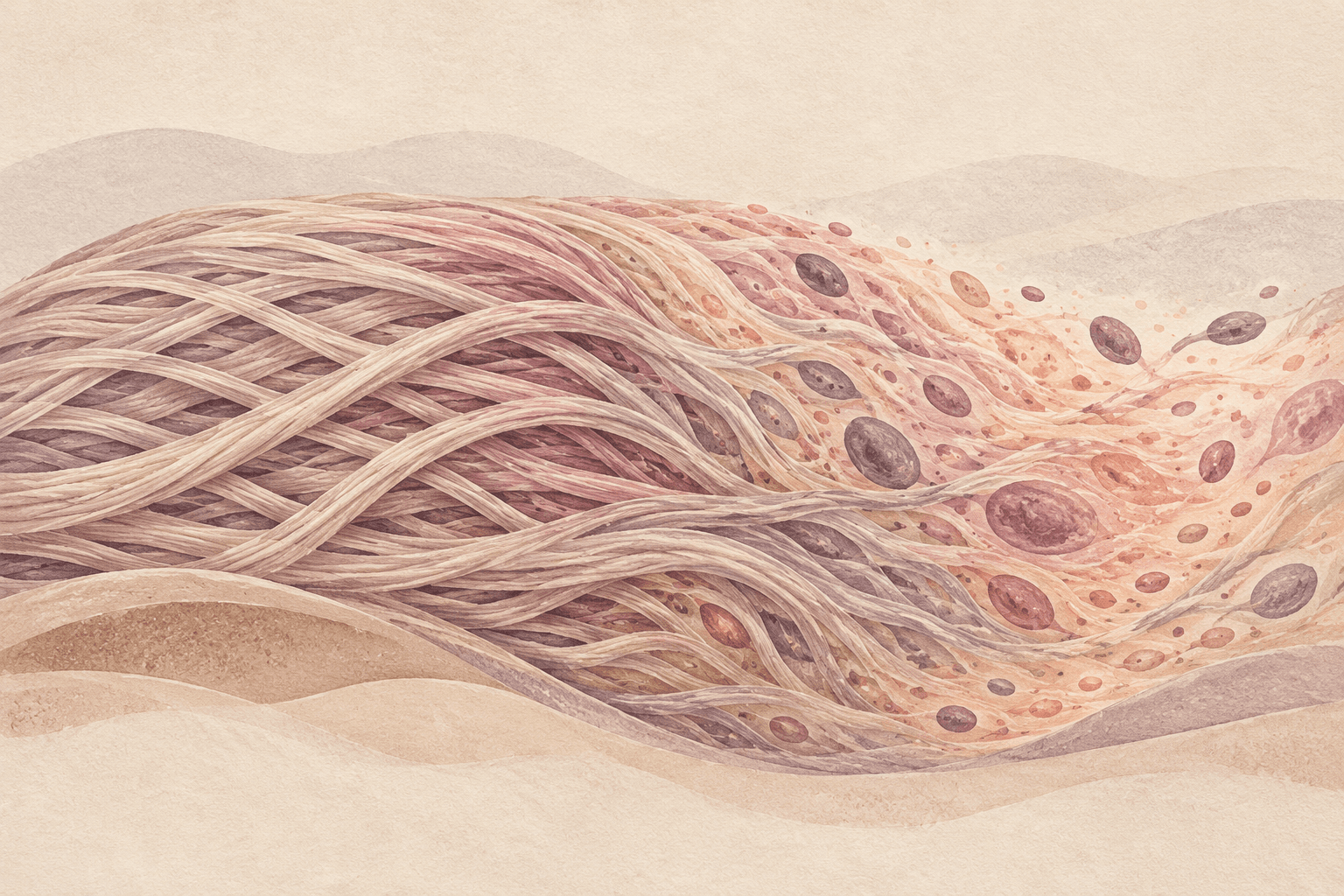
The mix shifted with age. Ovaries from women in their 50s had more structural proteins, the scaffolding that holds tissue together. Ovaries from women 70 and older had more proteins tied to inflammation, immune activity and tissue breakdown. Some features resembled cellular senescence, a state in which aging cells stop dividing.
Some proteins previously linked to ovarian cancer were also more plentiful in the older ovaries, even though all of the tissue looked normal and cancer-free. The study doesn't show that aging ovaries cause cancer, and it says nothing about whether healthy ovaries should be removed during other surgery.
Twenty-eight samples is a small number, and each came from a different woman at a different age, so these are snapshots rather than one ovary followed through time. The study also can't tell whether this late remodeling helps the body or harms it.
Get the next issue by email
Our weekly newsletter on what is new in health research, explained for curious readers and linked to the original studies. One email a week.
Sources
Source titles are preserved as published.
Reference Range Weekly is for general information. It does not provide medical advice, diagnosis, or treatment.