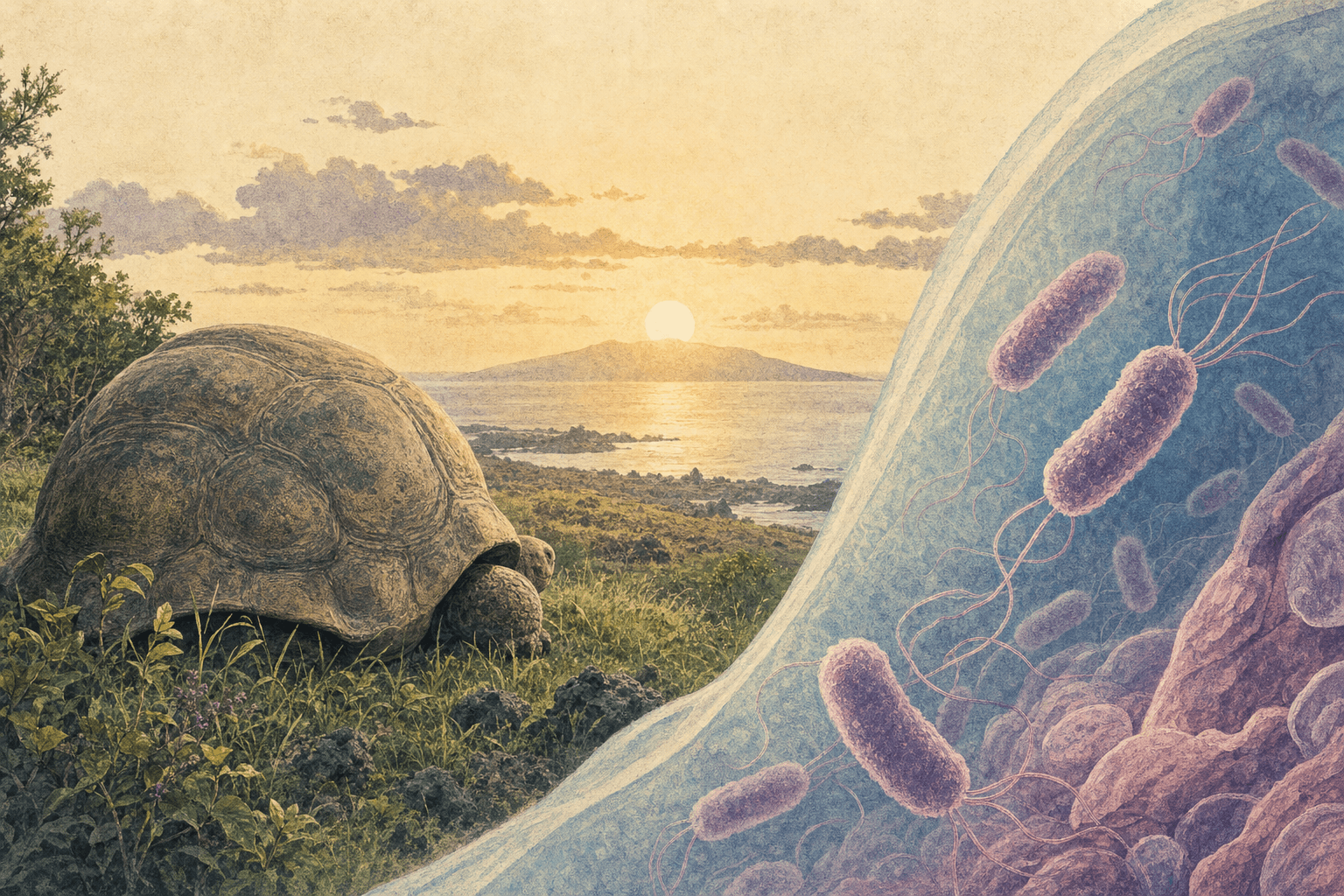
A 194-year-old tortoise, and why a vaccine floors some people
Several stories this week ask some version of the same question: why do bodies differ? One tortoise has lived for nearly two centuries. Two people get the same shot, and only one spends the night feverish. The answers so far are partial, and we've tried to show exactly where each one stops.

- Animal or lab study
- 5 Aldabra giant tortoises
Jonathan, an Aldabra giant tortoise living on the island of Saint Helena, is estimated to be about 194 years old, which makes him the oldest known land animal. A new study in Science Advances has now read his genome and his DNA methylation.
Methylation is a set of chemical tags on DNA that helps switch genes on and off. With age, those tags tend to drift into disorder, which researchers measure as methylation entropy. Across Jonathan and four other tortoises, entropy rose with age. But 272 gene switches, called promoters, stayed orderly in Jonathan and the two youngest animals while losing that order in the two older adults. Those promoters were enriched for genes tied to processing RNA and to mitochondria, the parts of the cell that make energy.
Jonathan also carried variants found only in him in 287 genes, and 12 of the potentially significant ones appear in aging databases.
The limits are built into the subject. This is one animal compared with four, two of them of unknown age. Nobody was allowed to draw Jonathan's blood, so the team worked from cheek scrapes and saliva and couldn't run RNA tests to see whether his unusual variants change gene activity. Only about 10% of promoters could be evaluated. The authors call their aging model a hypothesis and say the data cannot establish cause. Whether orderly energy genes matter for human aging is still an open question.
Published October 11, 2026

- Observational study
- 6,125,459 people in 118 countries and territories
About 30% of five-year-olds report some bodily pain. Among people 100 and older, it's about 70%.
Those figures come from a Nature Medicine study that pooled self-reported pain from 6,125,459 people in 118 countries and territories, drawn from 902 population surveys collected between 1990 and 2025. The aim was a set of reference curves, something like a children's growth chart, showing how common pain is at each age.
Back pain topped the list at around 40%, and facial pain was rarest, at about 2%. Women reported more pain at all 11 body sites, and the gap widened for severe pain: their risk of high-intensity pain was about 1.5 times men's.
Place mattered as much as sex. At 80 and older, any bodily pain was 30.6 percentage points more common in the least developed settings than in the most developed. Smoking, obesity, and low income together accounted for an estimated 18.3% of the global pain burden, from 12.6% in sub-Saharan Africa to 27.1% in eastern Europe. Those estimates rest on associations, so they don't show that removing those factors would remove the pain.
The curves also don't follow anyone through life. Most of the data compare different people at different ages, gathered by surveys that worded questions differently and asked about different stretches of time. Some regions and age groups were thinly covered.

Under permanent daylight saving time, the latest winter sunrise in Toronto would come at 8:51 a.m. In Calgary it would be 9:40 a.m. Under standard time, both arrive an hour earlier.
That hour is the heart of an analysis in the Canadian Medical Association Journal, led by Raymond Lam. If Canada ends the twice-yearly clock change, the authors argue, it should keep standard time. Morning light helps set the body clock, which shapes sleep and mood. They cite estimates that seasonal affective disorder affects 1–3% of Canadians, and that up to 15% have milder seasonal shifts in mood and sleep.
The opposite choice is gaining ground. Yukon adopted permanent daylight saving time in 2020, British Columbia followed in March 2026, and in July the US House passed a bill to make daylight saving time permanent.
This is a policy argument, not a new study measuring how people sleep under each system, and the details here come from reporting on the paper. The authors acknowledge what their choice costs: standard time brings earlier winter sunsets.
- Randomized trial
- 50 middle-aged adults with obesity
- 4 weeks
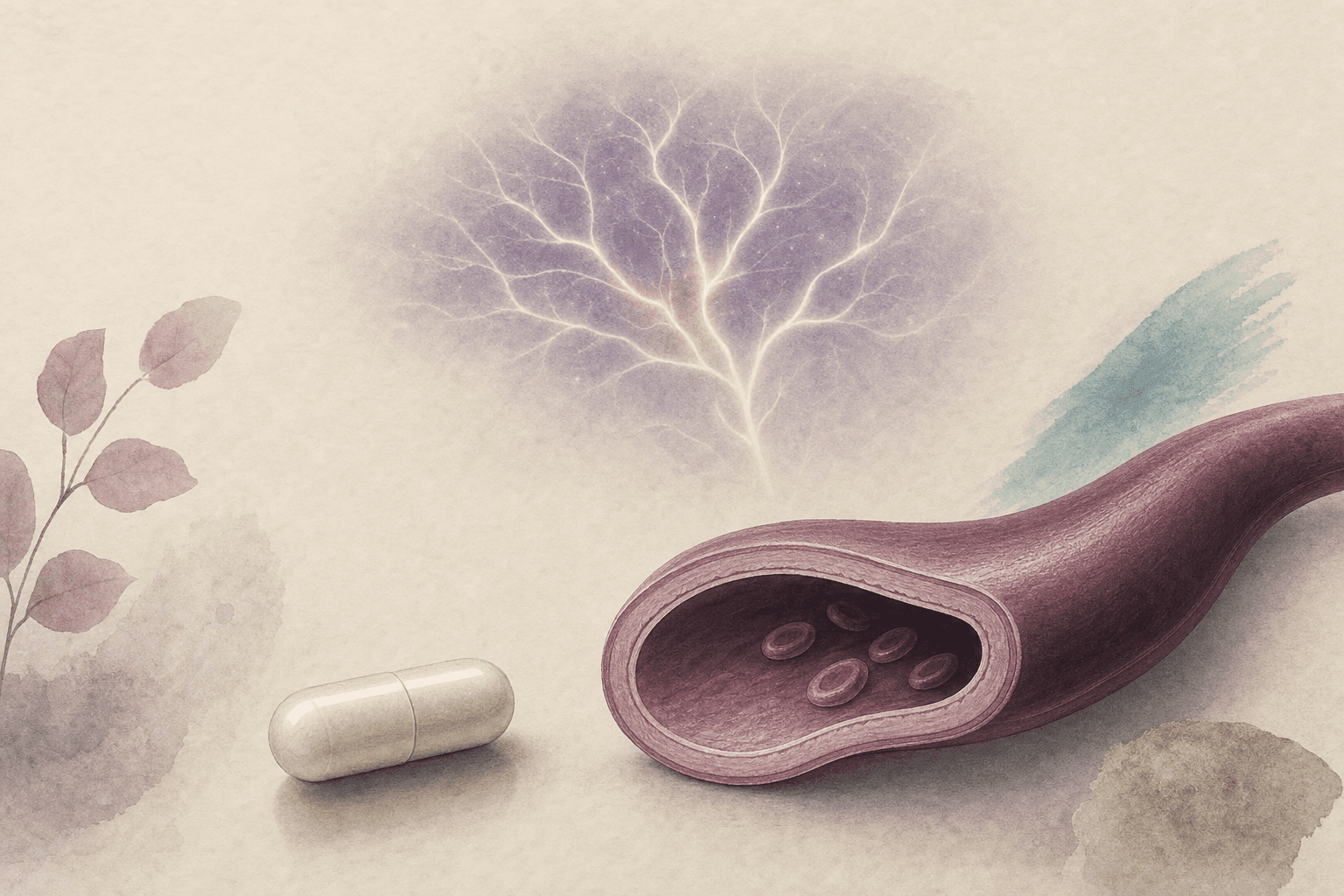
Urolithin A is a compound made by gut bacteria and sold as a supplement for aging and blood-vessel health. A trial in JAMA Network Open put one of those claims to a controlled test.
At the University of Oklahoma, adults aged 40 to 64 with obesity took either 1,000 mg of urolithin A or a placebo every day for four weeks, with neither participants nor researchers knowing who got which. The main measure was how much the main artery in the arm widens, a test of blood-vessel function. The two groups did not differ meaningfully.
One secondary measure did shift. During a memory task, the urolithin A group showed larger blood-flow responses in a region at the front of the brain's left side. People did no better on the task itself, and a secondary result like this needs confirming before it means much.
The supplement was well tolerated, and more than 95% of doses were taken as planned. Still, the analysis covered 50 people, 74% of them women, at a single site for a month. It shows no health benefit, and whether that brain blood-flow signal leads anywhere would take a longer, larger trial to answer.
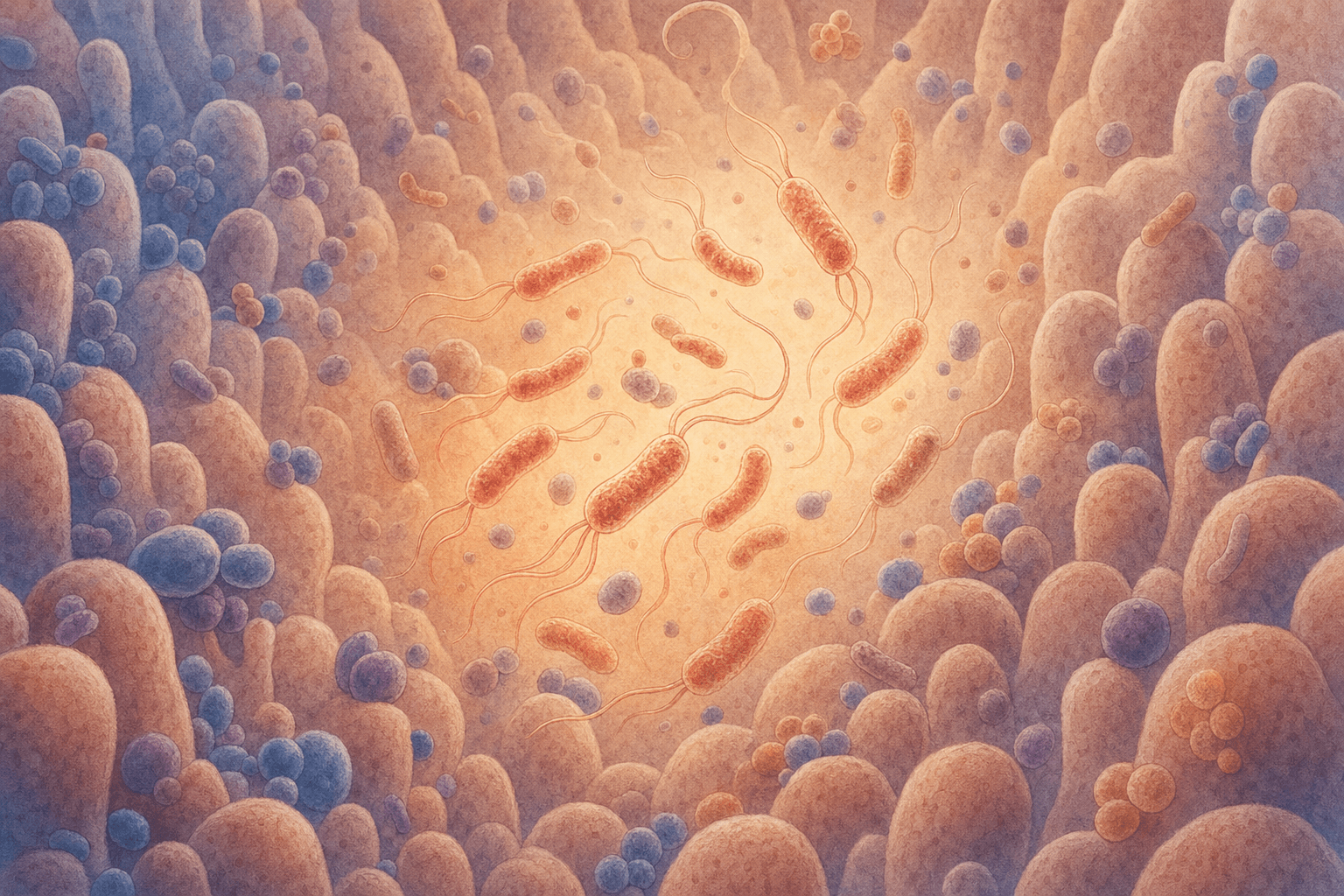
Why the same vaccine leaves some people feverish: clues in the gut
Two people get the same COVID-19 shot. One feels fine; the other spends the night with a fever. Fever is a common side effect, and it can make people wary of the next dose. A study in Science suggests part of the difference may lie in the bacteria living in our guts.
The researchers started with people. They collected stool from more than 170 people before and after a second or third dose, then compared those who ran worse fevers with those who had little or none. The high-fever group had more flagellin in their gut. Flagellin is the protein in the whip-like tails bacteria use to swim, so more of it suggests more mobile bacteria. That group also tended to show more gut inflammation.
A difference in stool samples could have many explanations, so the team moved to the lab. They exposed organoids, tiny lab-grown pieces of human intestine, to microbes from high-fever donors. Those microbiomes triggered stronger inflammation, and the response depended on flagellin.
Then came mice. Mice given fever-associated bacteria had a stronger temperature response, but only if they could sense flagellin. That points to flagellin doing something rather than just tagging along. There's a wrinkle: mice respond with a drop in temperature instead of a fever, so the mouse step parallels the human reaction rather than reproducing it.
The chain still has gaps. The human evidence is an association in about 170 people. Nobody yet knows why flagellin levels differ from person to person. Self-reported vegetarians tended to have lower levels, but diet wasn't tested as a way to change them. What the work offers is a testable explanation for a familiar puzzle: the same shot, landing in different guts.
Five more worth your time
GLP-1 drugs and macular degeneration: a result that flipped
- Observational study
In US health records, GLP-1 use first looked tied to about 68% higher odds of age-related macular degeneration, then to about 31% lower odds among people with type 2 diabetes once other health conditions were counted, in an unpublished meeting presentation that shows how much those adjustments matter.
Newswise (American Academy of Ophthalmology)Why some people with IBD start reacting to foods
- Animal or lab study
In mice, gut inflammation depleted bacteria that help break down parts of gluten and dairy and set off allergy-type responses, and people with IBD who report food reactions show similar microbial changes, though the mechanism isn't shown in humans.
Medical News TodayWhy 'zombie cells' pile up with age
- Animal or lab study
Mouse and cell experiments suggest that when a cellular recycling system called chaperone-mediated autophagy declines, the immune cells meant to clear lingering senescent cells get worse at the job, while the experimental drug that reversed this in mice is untested in people.
Nature AgingA dedicated helper raised postpartum care in a Chicago trial
- Randomized trial
- 405 Medicaid-insured pregnant or postpartum people
- 1 year
A year with a patient navigator raised postpartum visits and primary care visits a year after birth (57% vs 30%), even though the trial missed its main goal of delivering all six essential care components.
JAMA Health ForumDaily peanuts and the brain's response to insulin
- Randomized trial
- 31 healthy adults aged 60 to 75
- 16 weeks
In a small crossover trial funded by The Peanut Institute Foundation, adults aged 60 to 75 showed a better insulin response in one brain region after 16 weeks of daily peanuts, with no evidence of better memory or lower disease risk.
Medical Xpress
That's it for this week. Several of these findings come with an obvious next experiment attached, from the RNA tests the tortoise team couldn't run to a longer urolithin A trial. We'll be watching for them. See you next week.
Get the next issue by email
Our weekly newsletter on what is new in health research, explained for curious readers and linked to the original studies. One email a week.
Sources
Source titles are preserved as published.
- Epigenetic insights into extreme longevity in the world's oldest terrestrial animal, Jonathan · Science Advances
- An extremely old giant tortoise named Jonathan may hold the secret to a long, healthy life · Medical Xpress
- Daily peanut consumption beneficially affects brain insulin responsiveness, new research finds · Medical Xpress
- Urolithin A and Endothelial and Cerebrovascular Function in Middle-Aged Adults With Obesity: A Randomized Clinical Trial · JAMA Network Open
- Global and regional reference curves for pain across the lifespan in 6.1 million individuals in 118 countries · Nature Medicine
- The human gut microbiome primes fever after vaccination · Science
- Feverish after a vaccine? The reason could be your gut microbiome · Scientific American
- Decline of chaperone-mediated autophagy in aging impairs macrophage clearance of senescent cells · Nature Aging
- Patient Navigation and Postpartum Health Care Outcomes: A Randomized Clinical Trial · JAMA Health Forum
- Permanent Daylight Saving Time Could Harm Sleep and Mental Health, Analysis Says · Sci.News
- For people with diabetes, GLP-1 drugs may be linked to lower odds of a leading cause of blindness · Newswise (American Academy of Ophthalmology)
- Losing good bacteria during inflammation may trigger new food sensitivities in IBD · Medical News Today
- Analysis of health impacts associated with adopting permanent standard time or permanent daylight saving time to inform policy in Canada · CMAJ
Reference Range Weekly is for general information. It does not provide medical advice, diagnosis, or treatment.