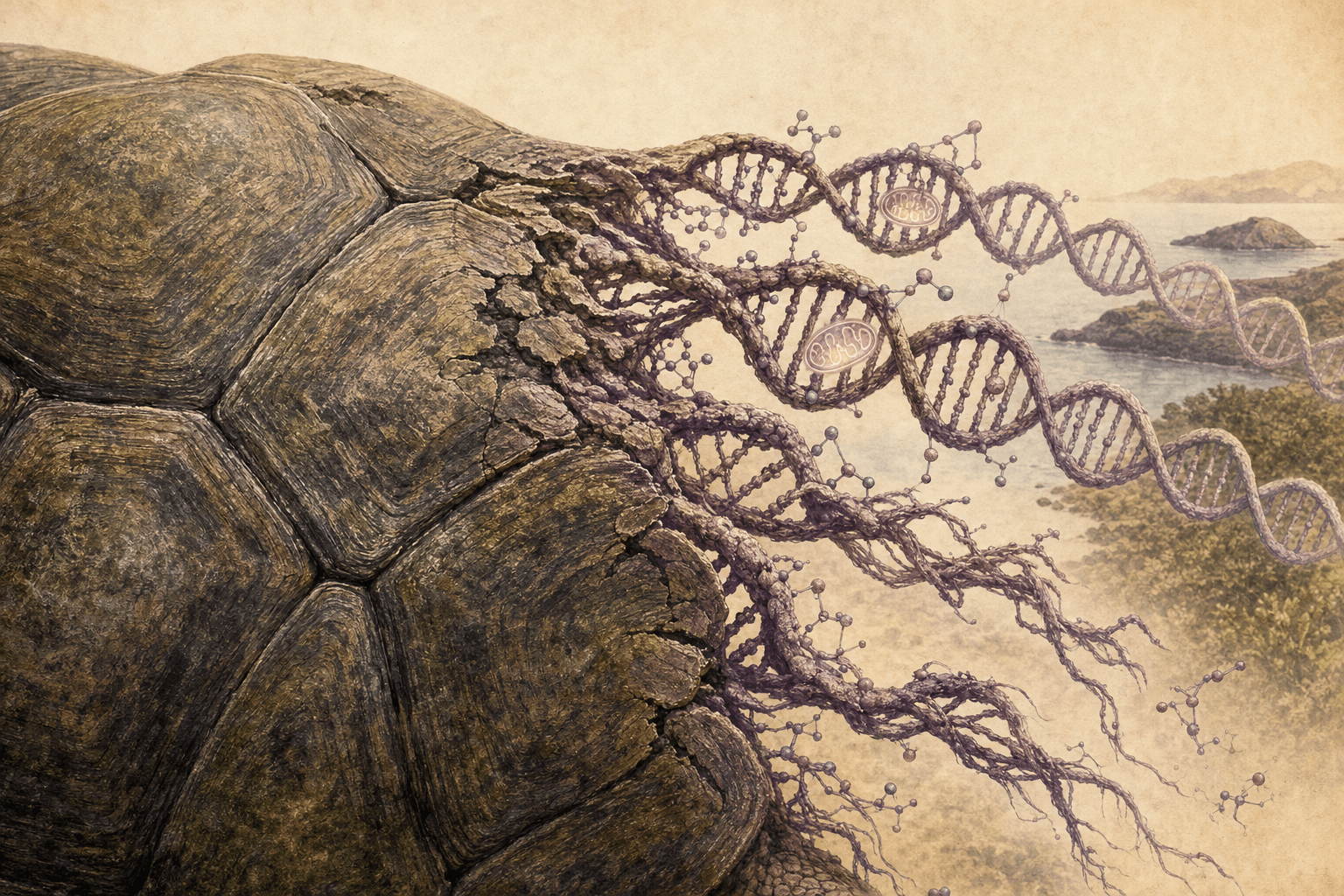
What a 194-year-old tortoise's DNA can and can't tell us about aging
- Animal or lab study
- 5 Aldabra giant tortoises
Jonathan, an Aldabra giant tortoise living on the island of Saint Helena, is estimated to be about 194 years old, which makes him the oldest known land animal. A new study in Science Advances has now read his genome and his DNA methylation.
Methylation is a set of chemical tags on DNA that helps switch genes on and off. With age, those tags tend to drift into disorder, which researchers measure as methylation entropy. Across Jonathan and four other tortoises, entropy rose with age. But 272 gene switches, called promoters, stayed orderly in Jonathan and the two youngest animals while losing that order in the two older adults. Those promoters were enriched for genes tied to processing RNA and to mitochondria, the parts of the cell that make energy.
Jonathan also carried variants found only in him in 287 genes, and 12 of the potentially significant ones appear in aging databases.
The limits are built into the subject. This is one animal compared with four, two of them of unknown age. Nobody was allowed to draw Jonathan's blood, so the team worked from cheek scrapes and saliva and couldn't run RNA tests to see whether his unusual variants change gene activity. Only about 10% of promoters could be evaluated. The authors call their aging model a hypothesis and say the data cannot establish cause. Whether orderly energy genes matter for human aging is still an open question.
Get the next issue by email
Our weekly newsletter on what is new in health research, explained for curious readers and linked to the original studies. One email a week.
Sources
Source titles are preserved as published.
Reference Range Weekly is for general information. It does not provide medical advice, diagnosis, or treatment.