Standing desks and vertical mice did little for sore arms, necks and shoulders
- Meta-analysis
- 2,478 participants
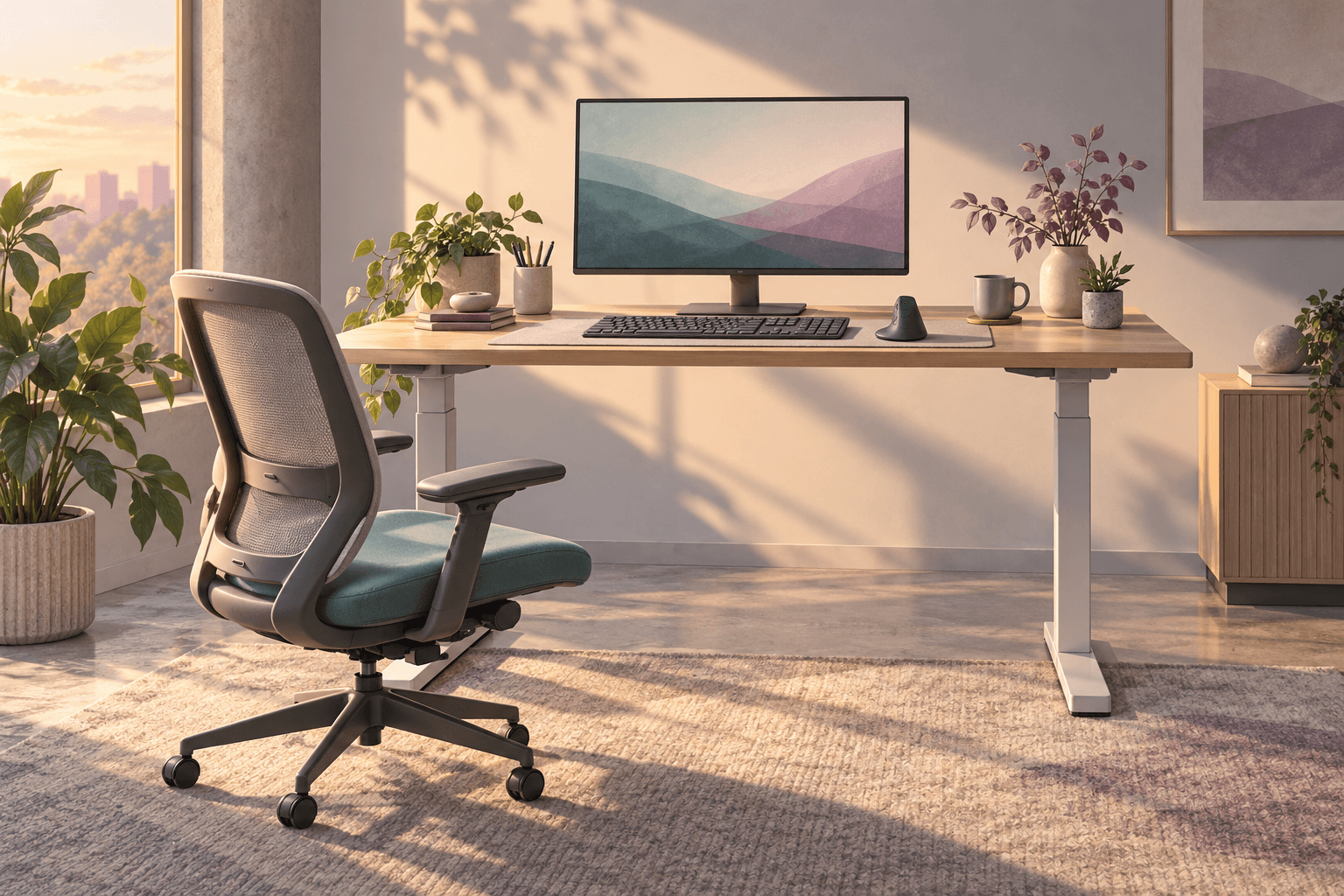
A standing desk, a vertical mouse, a chair that promises better posture: office ergonomics sells the idea that the right equipment can ease an aching neck or arm. A new Cochrane review checked that promise against the trials and found little support for people who already hurt.
The review updates a 2013 version and pulls together 20 randomized or quasi-randomized trials with 2,478 participants. Most looked at general work-related arm, neck or shoulder complaints. Four studied specific conditions such as carpal tunnel syndrome. The interventions ranged from standing desks to vertical mice to training programs.
Compared with no treatment, usual care or a placebo, the ergonomic changes made little to no difference to pain, day-to-day function, sick leave or recovery. Against exercise, ergonomics may have improved quality of life. The evidence on adding it to other treatments was too uncertain to interpret.
The trials themselves are part of the problem. Many had design flaws, and the authors rated certainty low to moderate. The review also covered only treatment of existing complaints, so it says nothing about whether a better setup prevents pain to begin with. Some groups may still benefit, particularly when ergonomics is one piece of a broader program. The authors' main conclusion is a request for better trials.
Get the next issue by email
Our weekly newsletter on what is new in health research, explained for curious readers and linked to the original studies. One email a week.
Sources
Source titles are preserved as published.
Reference Range Weekly is for general information. It does not provide medical advice, diagnosis, or treatment.