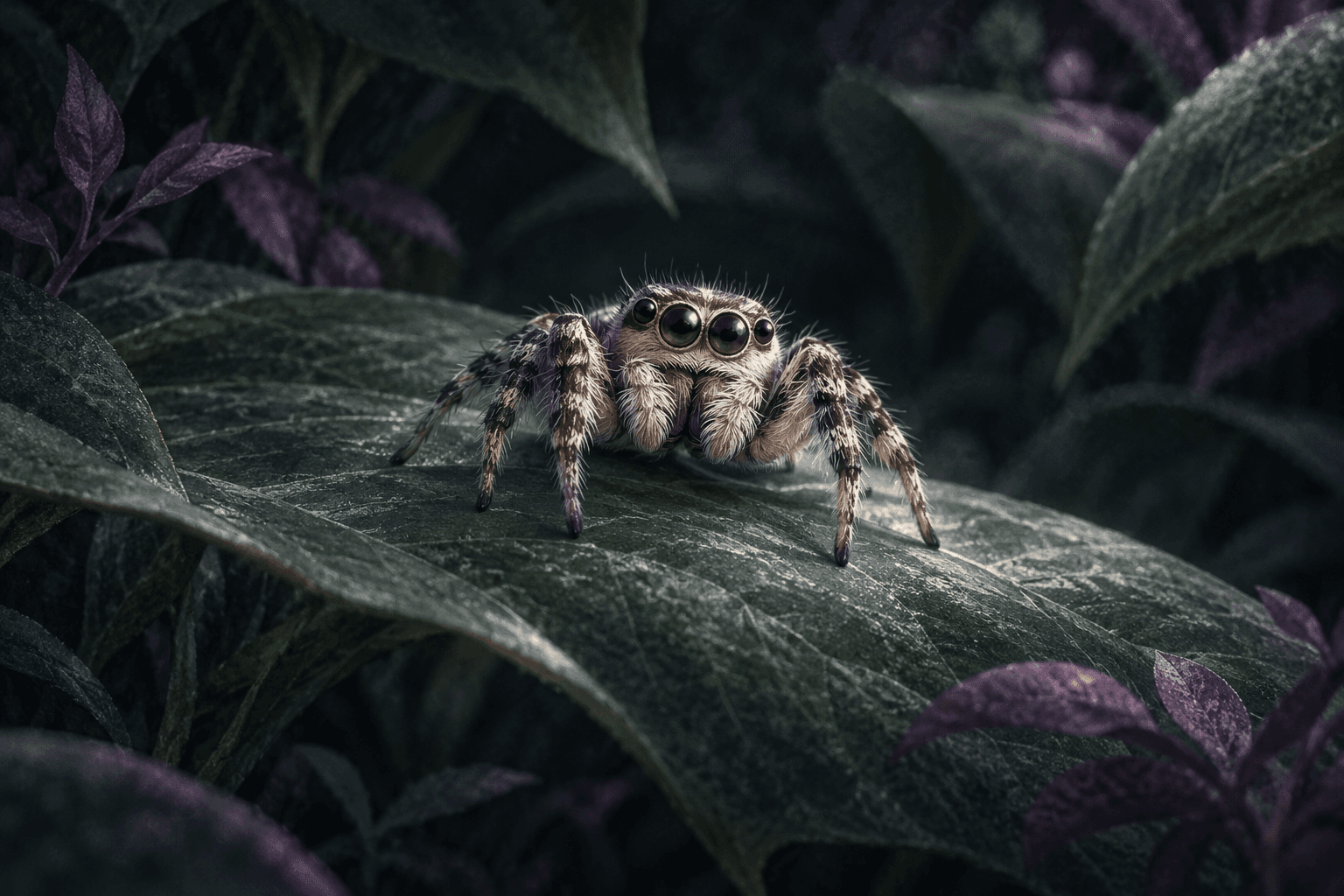
Jumping spiders appear to have a REM-like stage of sleep
- Animal or lab study
- Portia fimbriata jumping spiders
How do you tell whether a spider is asleep? A motionless spider might just be waiting.
Researchers studying the Australian jumping spider Portia fimbriata filmed the animals overnight with infrared cameras and played sounds to check whether a still spider would react. That let them separate sleep from simple stillness. The spiders were active by day, kept a daily rhythm even without outside time cues, and made up for lost rest after being disturbed: behavioral signs scientists use to recognize sleep.
The stranger finding came during recurring stretches of the night. The spiders showed eye movements and muscle twitches, and they were harder to rouse. Those features resemble REM sleep, the human sleep stage named for its rapid eye movements. The authors conclude that the spider shows behavioral sleep with a REM-like substate.
A spider's brain is built very differently from ours, so finding a similar pattern there is a clue about why sleep stages evolved, and a new puzzle about what REM sleep actually does.
The evidence is behavioral only. Nobody measured brain activity, and the work covers a single species. Twitching eyes don't show that spiders dream, or that their REM-like state works like ours.
Get the next issue by email
Our weekly newsletter on what is new in health research, explained for curious readers and linked to the original studies. One email a week.
Sources
Source titles are preserved as published.
Reference Range Weekly is for general information. It does not provide medical advice, diagnosis, or treatment.