A century-old TB vaccine eased tau damage in mice
- Animal or lab study
BCG, a tuberculosis vaccine, is also used to treat bladder cancer. Observational studies of those patients turned up something odd: the treatment was linked to less dementia. Nobody could say whether the vaccine deserved the credit, or how it might work.
A study in Science Advances tested the question in PS19 mice, which are bred to develop tangles of tau, a protein that builds up abnormally in the brain. The mice received BCG or saline at 3 months old and were examined months later.
The vaccinated mice had less chemically altered tau in the hippocampus, a brain region central to memory. Their brains shrank less, they did better on a test of recognizing new objects, and they survived longer.
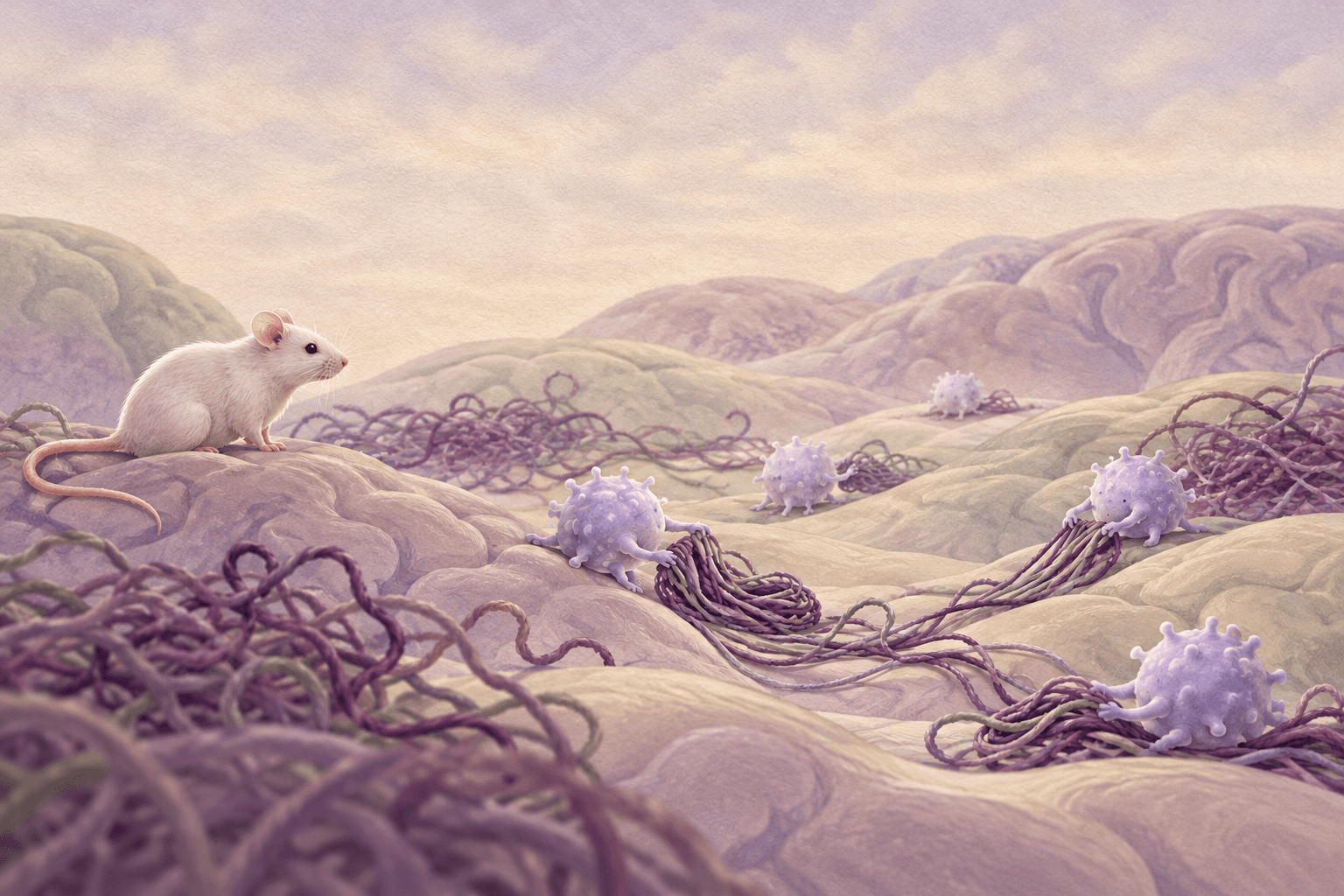
BCG reprogrammed immune cells, which then took up more tau fibrils. That could help explain the findings, but the mechanism remains unconfirmed. PS19 mice capture tau damage, not the whole of Alzheimer's disease. The human hint still comes from looking back at bladder cancer patients rather than from a trial. Whether BCG safely protects people from dementia remains unknown.
Get the next issue by email
Our weekly newsletter on what is new in health research, explained for curious readers and linked to the original studies. One email a week.
Sources
Source titles are preserved as published.
Reference Range Weekly is for general information. It does not provide medical advice, diagnosis, or treatment.